

Many of my long-time followers know that I wrote a chapter in the 2017 bestseller “The Dangerous Case of Donald Trump: 27 Psychiatrists and Mental Health Professionals Assess a President.” A 2nd edition with 37 professionals was released in 2019. As we approach yet another election in 2024 with this dangerous and unfit person on the ballot, the editor asked us to update our chapters as reflect on the current situation. Here is my submission to that collection, which i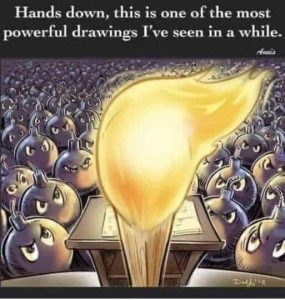 s only being released to the media and not available for general purchase.
In The Dangerous Case of Donald Trump, I wrote that Trump shared many personality traits and behaviors with those of abusive partners. After eight years of an unrelenting Trump debacle, those of us outside the MAGA cult certainly feel as if we are struggling to extricate ourselves from an abusive relationship with an erratic, out-of-control partner.
My assessments of Trump have focused on shame intolerance, which is at the root of those with narcissistic and antisocial personality disorders.
Trump has very low self-worth and, therefore, difficulty managing feelings of inadequacy, shame, guilt, or embarrassment. Healthy individuals can tolerate shame through honest self-appraisal, followed by humility, accountability, apology, and behavior change. Trump is completely lacking in these skills; he has never apologized, even for egregious behaviors witnessed by millions. I call people like Trump Other-blamers, because their most obvious behavior is to blame-shift to others when held accountable.
I wrote previously: “With shame and fear as the primary emotions driving Other-blamers, a lack of accountability becomes their most obvious and destructive character flaw. They have difficulty being introspective and acknowledging the effect of their behavior. This would involve gaining insight, admitting fault, and demonstrating remorse — actions that Other-blamers find devastatingly humiliating.” Extreme Other-blamers can be so immune to the prosocial emotions of shame and guilt that they may have no moral compass and behave in shamelessly antisocial ways.
After many years of media coverage, as well as daily social media posts and emails, Trump’s impact on political discourse, the culture, and the expression of morality has been devastating. His abusive traits of cruelty, dominance, selfishness, immaturity, and impulsivity are normalized daily for everyone to see — and copy.
I wrote in 2017 about the broad social impact of a leader’s inability to tolerate shame: “A fundamental problem with a Trump presidency is not merely that his poorly thought-out policies may harm us. It is that his character defects will normalize immoral Other-blaming behaviors and encourage their full expression among those who may have previously been held in check by expectations of socially acceptable behavior… Just as the trauma of witnessing domestic violence damages children, an emotionally immature president can affect the future of our nation regarding moral behavior, cultural stability, and psychological wellness. … Unfortunately, now that millions of Other-blamers have been encouraged by Trump to misbehave, it may be impossible to get that genie back in the bottle.”
Trump’s behavior is especially attractive to those who also have Other-blamer traits. When they see Trump getting away with capricious cruelty, entitlement, and lawlessness, they subconsciously think: “He has the freedom from guilt I’ve always wanted! I hate being constrained by conscience, morality, and laws. I hate being held accountable and apologizing.” This explains Trump’s psychological appeal: he has freed his followers from guilt and given them permission to behave shamelessly.
In 2017 I stated that “Trump is creating a national narcissism epidemic that will need significant moral leadership to change when he is defeated.” Today, I am even more convinced we are in the midst of a shame intolerance epidemic exacerbated by the sociopath-in-chief modeling a toxic stew of bad behaviors.
Indeed, hate crimes jumped 17 percent between 2016 and 2017 with Trump’s arrival on the political scene and increased annually until he left office. A study by political scientists showed that counties which hosted a Trump rally saw a 226 percent increase in hate-motivated incidents. Ruth Ben-Ghiat described in Strongmen: Mussolini to the Present common societal impacts of authoritarians, including a collapse of public ethics, an erosion of trust and authenticity between citizens, and patterns of blaming and attacking denigrated “others,” such as immigrants.
I am witnessing a rise in incivility firsthand this election year, after having canvassed for Democratic candidates for over 40 years. While there have always been people who rudely slammed doors, the increased frequency and level of disrespect is notable. I see it in how immediately defensive and aggressive Republicans are when they realize I am a Democrat. I’ve had people loudly shout “Leave!” the minute I say “I’m a volunteer with the Democratic Party.” I conclude they are embarrassed they are backing an immoral convicted felon and know they can’t defend him.
During a recent conversation with a Trump supporter, I witnessed her spin through a full range of Other-blamer conversational tactics, exactly as Trump does. Within a three-minute conversation she blatantly lied, blame-shifted, changed the subject, threw up a conspiracy theory, and finally angrily slammed the door when she saw she had lost the argument. Many MAGA adherents will make an outrageous comment, such as: “Harris is evil, because she cackles when she laughs.” But when I politely disagree with this outlandish statement, they fall back on a slippery form of avoidance and gaslighting: “You’re arguing. I don’t want to have an argument.” As if I were the one who made the false accusation. This tactic shuts down my rebuttal, and they can slam their door safe in their beliefs that they are right. It goes without saying that I never see any remorse from MAGA voters for their rude behaviors.
I predicted in 2017: “The coarsening of society and loss of civility and empathy will likely be irreparable in the near term. We can only hope that we break up with this abusive president before he breaks up the country.” Mercifully, we broke up with him in 2020 and absolutely must do so in 2024 to save our democracy and civil society.
The challenge, however, is that those with Other-blamer tendencies are trapped in a psychological doom loop, making it unlikely they will change.
Trump voters have witnessed the same avalanche of his abusive behavior we all have, so most of us are mind-boggled that they continue to support him. Shame intolerance plays a part; their blind allegiance continues because they are ashamed to admit they made mistakes by voting for him twice, buying his wacky merch, attending his dystopian rallies, and donating to his legal fees. To protect themselves from shame, they will double-down on their position, even if it means backing a morally bankrupt conman for president.
I am sad to say that the model I presented in 2017 still holds true. We are in an abusive relationship with Trump and his millions of true believers. To break the cult leader’s spell, we must first vanquish Trump and all MAGA politicians through the vote. We must hold Trump accountable and punish him through the legal system. Ideally, we should begin improved emotional intelligence education in schools to build healthy shame tolerance in future generations. Most significantly, we must re-center moral integrity as a valued personal trait and a requirement of future generations of politicians, judges, and civic leaders.
_________________________
You may also like….
Antisocial Trump Harms our Prosocial Mental Wellbeing
Journal Article: Stories of Ethical Activism in the Age of Trump
Trump and his Followers: A Mutual Admiration Society of Deeply Troubled Psyches
Abdication syndrome: For many people, early childhood represents an ideal which they long to return to (if only subconsciously). How wonderful it would be to worship powerful parental figures, who take responsibility for our own lives, protect us from the world, and provide answers to all our questions.
The urge to return to this ideal state is one of the reasons some people are attracted to charismatic cult leaders and gurus. Although many people seek gurus because of a genuine impulse for spiritual development, others are motivated by a more unhealthy impulse. They are not actually seeking enlightenment, but a return to a childhood state of unconditional devotion and irresponsibility. They want to abdicate responsibility for their own lives, and hand it over to the guru or cult leader. They don’t have to worry about anything, because the guru will guide them in the right direction. They don’t need to think for themselves, because the leader knows all the answers. They don’t need to struggle in their lives; they can just bask in the love and protection of the guru, as they did with their parents when they were young children.