
Being honest with yourself is the key to accountability and personal growth. Self-honesty and being able to hear the truth from yourself or other people is the real goal of personal growth and psychotherapy. Without this skill of honesty, self-awareness isn’t possible.
The problem is, self-honesty is tough! This article advocates for self-awareness, and notes that we often have blocks to that process. I’d like to highlight some aspects missing from the article that dive a bit deeper.
Shame is a powerful emotion that often blocks self-awareness and the ability to change. I believe that the main goal of therapy for most people is to learn shame tolerance. This allows them to be honest with themselves.
Unfortunately, many of us have unhealthy relationships with shame usually learned in childhood experiences with parents who did not know how to model or teach shame tolerance. We learn to either excessively Self-blame, loading on criticism, doubt and self-consciousness so that shame becomes a weapon we use to beat ourselves up. Rather than being helpful, shame becomes painful and we lack self-compassion to grant ourselves grace for normal mistakes. This can lead to rumination, anticipatory worry, and fears of risk taking. As the article notes, it can also cause a self-preoccupation that feels like self-awareness but is done in the service of managing our image with others. We may engage in perfectionism in an attempt to avoid mistakes and self-judgments. Self-blamers load on such heavy doses of shame that they don’t have a realistic sense of what are normal mistakes and foibles.
Other-blaming is the term I’ve used for narcissistic defensiveness and denial about mistakes. If a person becomes Teflon for any criticism by others, they are certainly also lying about self-criticism. When shame becomes untenable and unacceptable because it threatens their ego and self-worth, they can’t take in any honest feedback. Change becomes impossible because honesty with the self is not even on the table.
The third type of unhealthy shame tolerance is Blame Avoiding. These types generally can’t be honest because they distance themselves from situations where they might get criticized. They may isolate socially, work for themselves, avoid close relationships, and avoid risks of any kind in life.
All three of these unhealthy responses to shame mean a person cannot be self-aware because they cannot take in a realistic, honest set of facts about their behaviors.
As the article notes, meditation can be a very helpful tool to build self-awareness, especially if combined with deeper self-reflection and psychotherapy. Shame is an emotion that many people lack awareness of because they skip right past it on the way to face-saving tactics of defensive anger, avoidance, or denial. Slowing down to build emotional intelligence about shame is an essential step to self-awareness, self-honesty and behavior change,
Self-compassion is also a key tool, because we don’t just have to notice or be aware of the behavior but also build the tolerance to really sit with the feeling of shame when we make bad choices so that we can really learn from them. If every time I eat too many cookies I either harshly criticize myself (“I have no self-discipline! I’m a weak-willed self-sabotoger!) or blame someone else (“My spouse always buys cookies and that’s why I eat too many of them!), I”m not going to actually learn from the truthful facts and hold myself accountable.
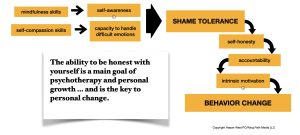
So we need mindfulness skills to build self-awareness and self-compassion skills to build the capacity to manage difficult emotions so that we can tolerate shame so that we can handle honest facts about ourselves so that we can hold ourselves accountable so that we can make personal changes. I’ve created this chart to help illustrate the sequence that needs to happen:

My email closing line has for years been “be kind to yourself…”, but maybe I should change it to “be kind and honest with yourself…”
https://greatergood.berkeley.edu/article/item/how_selfawareness_makes_every_habit_easier?utm_source=Greater+Good+Science+Center&utm_campaign=98aef99aa2-EMAIL_CAMPAIGN_GG_Newsletter_May_07_2026&utm_medium=email&utm_term=0_5ae73e326e-98aef99aa2-71460127